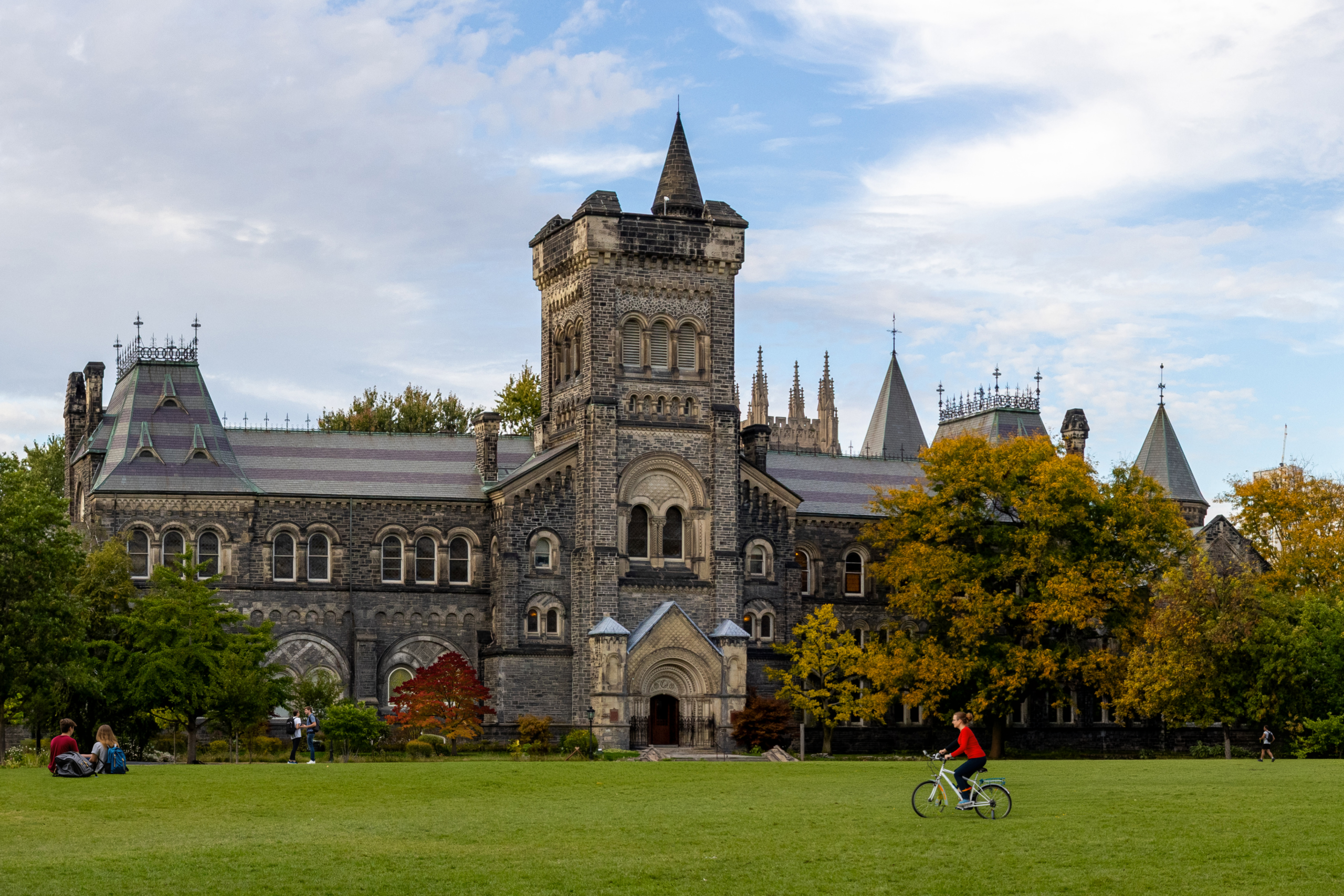
University of Toronto Leads Canadian Universities In Rankings
Congratulations are in order!
The latest U.S. News & World Report Best Global Universities Rankings once again affirm what many in higher education have long recognised: the University of Toronto remains Canada’s premier research university and one of the world’s leading academic institutions.
Congratulations to the University of Toronto for earning the distinction of Canada’s highest-ranked university, placing 20th globally and 11th among public universities worldwide. The achievement reflects decades of sustained investment in research, international collaboration, and scholarly excellence across an extraordinary breadth of disciplines.


The university’s performance is particularly impressive in health sciences and medicine, with top-10 global rankings in surgery, radiology, clinical medicine, oncology, psychiatry, social sciences and public health, alongside a remarkable fifth-place finish in arts and humanities. It is a reminder that research excellence is not confined to one discipline but flourishes across the institution.
While the University of Toronto continues to occupy Canada’s highest position, the rankings also provide an opportunity to reflect on the broader Canadian higher education landscape.
Among Ontario institutions, the York University was ranked 17th in Canada, continuing to demonstrate strength in research despite operating in one of the country’s most competitive university environments. Particularly noteworthy are York’s performances in Economics and Business (166th globally), Arts and Humanities (195th) and Psychiatry/Psychology (214th). These rankings illustrate that while York may not compete directly with Canada’s largest research-intensive institutions across every discipline, it has developed internationally recognised areas of scholarly strength.
The University of Windsor, ranked 26th in Canada, similarly reflects the growing research capacity of mid-sized comprehensive universities. Windsor has steadily expanded its research profile over the past decade while maintaining strong industry partnerships, particularly in engineering, automotive innovation, manufacturing, and cross-border research initiatives.
Likewise, Lakehead University, ranked 32nd nationally, continues to outperform expectations for an institution of its size. Rather than competing solely through research volume, Lakehead has built a reputation around student-centred education, environmental research, Indigenous scholarship, and regional innovation. Institutions such as Lakehead demonstrate that research impact cannot always be measured simply by scale; specialised excellence and community engagement remain significant contributors to Canada’s higher education ecosystem.
Rankings inevitably attract attention, but they also require context.
Looking Beyond the Numbers
The U.S. News Best Global Universities Rankings focus almost exclusively on research performance, evaluating institutions through indicators such as global and regional research reputation, publication output, citation impact, highly cited papers, and international collaboration. Student experience, teaching quality, graduate satisfaction, campus culture, and learner support play little role in determining institutional position.
Consequently, the rankings tell us considerably more about an institution’s research influence than they do about the day-to-day experience of students.
This distinction matters.
Research-intensive universities naturally benefit from large medical schools, extensive research funding, international collaborations, and substantial publication output. These characteristics propel institutions such as the University of Toronto into the world’s top tier. Meanwhile, comprehensive universities serving regional communities often pursue different institutional missions—emphasising teaching excellence, workforce development, accessibility, and community engagement—that are not fully reflected within global ranking methodologies.
A Strong Canadian Research System
Taken together, these results reinforce Canada’s reputation as a global leader in higher education.
The University of Toronto continues to set the international benchmark for Canadian research universities, while institutions including York University, the University of Windsor, and Lakehead University each contribute distinctive strengths that enrich Canada’s postsecondary landscape. Whether through world-leading medical research, internationally recognised scholarship, regional innovation, or student-centred education, each institution plays an important role in advancing knowledge and preparing the next generation of graduates.
For prospective students, policymakers, and institutional leaders alike, the rankings offer an important reminder: excellence in higher education takes many forms. Research prestige remains vital, but so too do teaching quality, student success, institutional mission, and community impact.
Canada’s universities continue to demonstrate that global competitiveness is not confined to a single institution—it is strengthened by a diverse system in which every university contributes in meaningful and complementary ways.
Leadership and Practice




news via inbox
Get the latest news right to your inbox!